

The crisis of E waste recycling Singapore reveals itself not in policy documents or environmental reports, but in the cluttered storerooms and forgotten drawers of ordinary flats across the island, where old mobile phones gather dust beside tangled charging cables and obsolete laptops that nobody quite knows what to do with. I have spent time in these homes, watching families navigate the peculiar anxiety that comes with technological waste, uncertain whether their discarded electronics belong in the rubbish chute, worried about data theft, confused about where responsible disposal actually happens.
The Weight of Accumulation
Walk through any Housing Development Board estate on collection day and you will see the material evidence of our digital age: television sets awaiting pickup, printers with torn power cords, desktop computers from another era. Mrs Tan, a retired teacher living in Bedok, showed me her storage cupboard where seven old mobile phones sat in a shoebox. “I know I should recycle them,” she told me, “but I kept thinking I would do it later, when it was more convenient.”
The numbers are staggering. Sixty thousand tonnes of electronic waste generated annually in a country smaller than many cities. That is the weight of roughly 400,000 cars, except instead of vehicles, we are talking about the devices that structure modern life.
Where the System Meets the Street
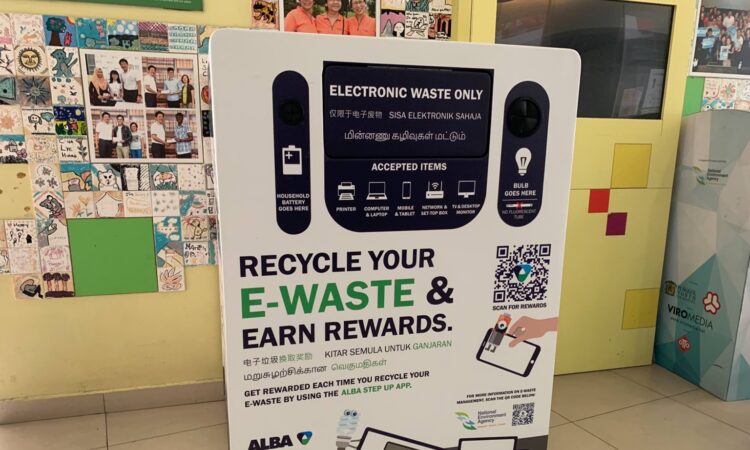
The infrastructure for E waste recycling Singapore exists, but knowing it exists and accessing it are different matters entirely. The collection points scatter across the island:
- Large green bins marked with the recycling symbol stand in void decks and near community centres, accepting small electronics and batteries
- Retail stores operate take-back programmes, though many residents remain unaware of these options
- Licensed recycling centres accept larger items, but require residents to transport bulky electronics themselves
- Quarterly collection events bring trucks to neighbourhoods, yet these depend on advance notice and specific timing
- Community centres sometimes serve as temporary collection points during special drives
Mr Kumar, a technician living in Jurong, explained his frustration: “The bin downstairs is often full. The recycling centre closes before I finish work. So the old printer sits in my house for months.” His experience illuminates a gap between infrastructure and accessibility.
The Hidden Costs of Disposal
Behind every piece of electronic waste lies a calculation families make about time, effort, and priority. I watched Ms Lee, a single mother of two, contemplate an old laptop. She worried about personal information despite deleting files. She lacked transport to carry it to a recycling centre. The laptop remained on her shelf, neither useful nor properly recycled.
“People think recycling is just about caring for the environment,” one community organiser told me. “But it is also about having the resources to care. Time is a resource. Knowledge is a resource. Transport is a resource.”
What Actually Needs Recycling
The scope of E waste recycling Singaporev extends beyond what many residents realise. During a neighbourhood collection drive, I observed families bringing items they had long considered too insignificant to matter: electric kettles, hair dryers, computer mice, extension cords.
The list encompasses daily life: smartphones and tablets, laptops and keyboards, televisions and set-top boxes, kitchen appliances with electronic components, fans and vacuum cleaners, lamps and light fixtures, power banks and chargers, gaming consoles and remote controls, electric shavers and toothbrushes. Nearly anything that plugs in or runs on batteries requires specialized disposal.
Preparing for Safe Disposal
The anxiety about data security runs deep. I have heard countless stories of people keeping old devices because they fear their information might be recovered. This fear is not irrational.
The preparation process demands attention:
- Perform factory resets on smartphones, tablets, and computers to erase personal data
- Remove SIM cards and memory cards from mobile devices
- Delete accounts and sign out of services before disposal
- For highly sensitive devices, consider physical destruction of hard drives at authorized centres
- Remove batteries where possible, as they require separate recycling pathways
- Keep device accessories together for more efficient processing
Mr Lim, a small business owner, shared how he paid for professional data destruction before recycling his work computer. “It cost money, but my client information was worth protecting,” he explained.
The Ripple Effects
I have traced where the electronics go after collection, following the chain from neighbourhood bin to processing facility. The sorting happens by hand initially, workers in protective gear separating hazardous components. Machines then shred and separate by material type. Metals are recovered. Plastics are sorted. Toxic substances are contained.
But much never enters this system. Items tossed in regular rubbish end up incinerated, their materials lost, their toxins potentially released. Devices hoarded at home serve neither owner nor environment.
Making It Work
The residents who successfully navigate E waste recycling Singapore share certain strategies. They mark collection dates on calendars. They coordinate with neighbours to share transport to recycling centres. They photograph QR codes on collection bins for quick reference. They ask retailers about take-back options during purchases.
These small adaptations matter because environmental responsibility ultimately depends on people finding ways to integrate it into already complicated lives. The answer to our e-waste challenge lies not only in better infrastructure but in understanding the daily realities that shape whether people can access that infrastructure through effective E waste recycling Singapore.

