
Outdoor kitchens always look effortless in photos. A grill, a counter, a few stools, soft lighting. Simple. But anyone who has tried setting one up knows there is a big difference between looking good and working well. The kitchens that feel comfortable to use usually come from a mix of smart planning and avoiding a few very common mistakes.
When planning a BBQ outdoor kitchen, it helps to step back and think beyond the grill. The entire space needs to support how you cook, move, store things, and host people. A quick browse through the layouts on BBQs2u makes this clearer, as their webpage shows outdoor kitchens arranged as practical working spaces rather than decorative displays.
Do: Plan the layout before buying anything
It is tempting to buy cabinets or a grill first and “figure it out later.” That usually leads to awkward gaps and tight corners.
- Measure the space properly
- Decide where cooking, prep, and serving will happen
- Leave enough room to move comfortably
- Think about where guests might stand or sit
A little planning early saves a lot of rearranging later.
Don’t: Underestimate the importance of storage
Outdoor kitchens without proper storage become messy very quickly.
- Add drawers for tools, tongs, and utensils
- Include cabinets for trays, charcoal, and supplies
- Use sealed doors to protect from dust and rain
Good storage keeps counters clear and cooking stress-free.
Do: Give yourself more prep space than you think you need
This is one of the most overlooked parts.
- Room for chopping, plating, and serving
- Clear counter space beside the grill
- Easy access to tools without turning around constantly
When prep space is tight, cooking starts to feel uncomfortable.
Don’t: Place the kitchen in a fully exposed area
Weather plays a bigger role than people expect.
- Avoid strong wind paths
- Consider adding a pergola or partial cover
- Choose a spot with some natural shelter
Comfort decides how often you will actually use the kitchen.
Do: Make it social, not isolated
Outdoor kitchens are meant to be gathering points.
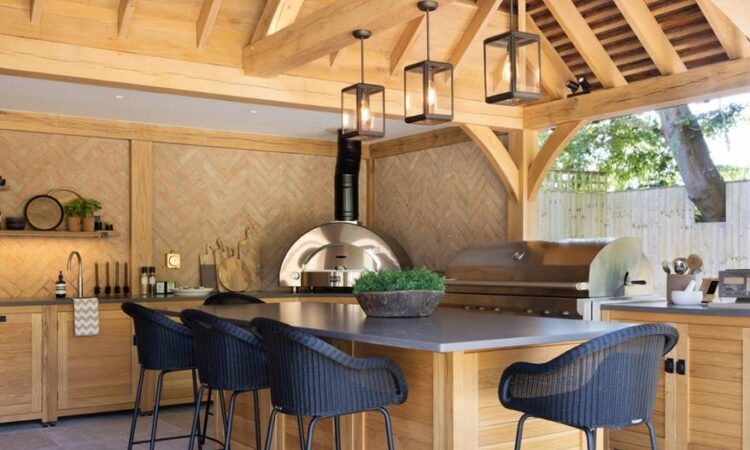
- Add a bar-style counter or overhang for stools
- Leave open standing space for guests
- Keep the cooking zone accessible but not crowded
This turns cooking into a shared activity instead of a solo task.
Do: Match the kitchen to the garden
Materials and finishes should feel natural outdoors.
- Stone, wood, or matte steel tones work well
- Colours that blend with paving and plants feel cohesive
- Durable materials reduce long-term maintenance
The kitchen should feel like it belongs in the garden, not placed there as an afterthought.
Don’t: Let corner space go to waste
Corners often become dead zones without the right design. Practical solutions like the Whistler Cirencester double doors help turn those awkward areas into accessible storage while keeping the layout smooth.
A successful outdoor kitchen is rarely about adding more features. It is about avoiding small mistakes that affect everyday use. When you follow the right do’s and steer clear of the common don’ts, the space becomes easy to cook in, comfortable to gather around, and something you genuinely enjoy using.